
Now for this piece, I would like you to imagine a single line of fate moving forward in time with some speed. It might even be easier to imagine an immortal person living throughout the timelines I will soon be describing. Or better yet, assume that I personally know some stories of members and heroes of a specific bedouin tribe, Banu Numayr and its rooted clan Banu Amr that was active in Najd region of the Arabian Peninsula. I will be telling some of these stories to you and only you, dear reader. I figured this will be the smoothest way to go with it. Please note that it took me a great while and effort to connect separate historical sources and to funnel them into pieces of storylines while using *just the necessary amount* of fiction. Meaning, whatever you are about to read will be for most intends (including legal) a work of fiction, while its worth as such and its value as an origin story is simply tremendous to me. It will also benefit all readers to have at least a basic working knowledge about pre-Islamic and Islamic Bedouin cultures, alongside early years of Islam as a rising religion, governance, and some of its challengers starting from the times of its foxily convincing founder Mohammad. These will be necessary to comprehend this story as intended, hopefully to its fullest extent.
Still Some History First
Earliest hero will be living around years of 600, 10 years before the supposed prophet of Islam had his revelation experience and assumed the mantle of prophet of Islam according to the official canon. But to understand the relation between tribes of those times better, I will fist mention a little bit of the wider scenery. Paint a frame, in other words. This is regardless of what I said in the previous paragraph, because from now on I claim historically-inspired but ultimately fictional responsibility.
The Arabian Peninsula of those times had distinguishable regions with differing cultures with variable sources of income. This is true despite the fact that the majority of the region is arid and vast deserts seemed to stretch everywhere, back then as it is now. This didn’t stop some people from generally “settling” into the wider area, including its deserts. Deserts’ overall conditions allowed very little for agriculture and arable land to begin with, naturally. So the people who were stubborn, unlucky or adventurous enough had to heavily rely socioeconomically on the beasts they could breed with relative ease when experienced. And the same beasts also gave any traveler on deserts tremendous advantages: Camels. And camel herding, (camel-relying) caravan forming (and their transportation) and other mercantile activities related to camels were simply the reality of daily life in pretty much the entire Arabia. This last sentence upheld its accuracy up until the point of fossil fuel discoveries and fossilization of majority of world’s energy source. But I will now stop digressing further.
The center of this peninsula consists of one such region, aforementioned Najd, with Nafud Desert covering its northern borders and Riyadh of contemporary (Saudi) Arabia is also located in this region. The area around Riyadh has been important around these historic times as well, mostly for its proximity to one of the major trade routes to-and-from Yemeni port towns and the wider global trading network. But none could deny the apex importance and wealth of strategically-well established trading (caravan) towns of Medina and Mecca; the latter also housing Ka’aba and other significantly important religious sites and artifacts to make it also a destination of recurrent pilgrimages. But unlike establishments (and subsequently, people) that were flourishing from trade, Najd with its harsh deserts ended up earning myriads of infamous nicknames. These nicknames, dubbed-and-agreed-on by the inhabitants of pretty much every other region were primarily that it was a “bandit county” or “raiders region”. Deserts were, and still are naturally dangerous environments to traverse. But as with almost everything, wherever there is a human; there is a way to make things imaginatively worse. One must also imagine the conditions of the area and the lack of peaceful bounty in the region. At least they were not in a considerable quantity by any figment of reasoning. So in short, most people of Najd relied heavily on income “generated” from raiding passing caravans in some way or another. And gradually, regions of relative paid-safety emerge in the form of pockets dominated by a single or a number of tribes. These tribes eventually considered themselves under the same clan, and clans were the primary (and mostly only) actors to form an authority and regulate the majority of social life. Banu Numayr was such a tribe under such a clan that was Banu Amr. The nameless&timeless members, heroes and philosophers who will eventually lead up to me as a person are all house-members of Banu Numayr. And they were one of the most significant in Najd, which then it did not take too much to become, but it is still a feat worthy to mention to begin with.
One last thing to mention here before the next part will be about overall-religion and beliefs in 600’s, still-pre-Islamic Arabia. While there are not enough surviving (and scientifically accreditable) evidence to paint a crystal clear image of those times, there is enough evidence to know that it was a great mixture of (vast majority) polytheistic religions that dominated the lives of nomadic Arabs. For entirety of their purposes and meanings, you can assume all the characters below believe in a quasi-religious amalgamation of polytheistic religions and beliefs of Bedouins. Some form of Arabian paganism, in general, can also be imagined for the same purpose.
Now the Stories Begin, At Least a Few of Them
Coming back to the 600’s Arabia once more, the winds full of dust and unrest were already blowing too-heavy-to-ignore in the air. Population in the Arabian Peninsula was increasing with accelerating speed. This triggers, what can be called in twenty-first century terms, waves of mass migration. Hordes after hordes of people began flooding the streets of until-then relatively peaceful caravan&pilgrimage towns of Mecca and Medina. It is amidst this major turbulence that soon-to-become-a-legendary name Mohammad, or rather simpler, a person carrying the name Mohammad approached ever closer to donning the mantle of prophethood. Once more, according to the official canons of widest-recognized Islamic teachings.
One hero told me of the earliest famous story of his and how he died at the end of it. He remembered first days of Mohammad beginning to preach about his new religion. I remember him being unable to contain his laughter as he kept remembering how ridiculous it all sounded to his ears as he kept hearing more and more about him. This kept going on stronger and stronger as Mohammad’s following began increasing in numbers. Although he was unable to remember when and in exactly which clash he perished in, what he did not fail to remember precisely was his stubborn resistance both to Mohammad and the growing number of people in his flock.
As it is, once again, widely agreed upon in the canon of Islam: By the late 620’s and early 630’s the Islam as a religion and a sociocultural method of living began spreading its roots deeply into the fabric of the Arabian Peninsula. Particularly in Mecca, Medina and all the way to twenty-first century Jordan and everything laid south from it. It is around those times a group of heroes hail from. They remember fighting left, right, center and sometimes even above. Fighting to prevent growing Islam and followers of Mohammad (Mohammedan’s) from spreading any further. They all die here in this period, of course. But their struggle paves path for perhaps even the greatest heroes and philosophers of these stories to emerge just below.
Right after the death of Mohammad, once again to directly cite almost all Islamic canons; the most difficult tests of the religion of Islam as a whole begin. Both internally and externally. Perhaps real troubles began even before the agreed-on reported death of the supposed prophet. But to come back to the greatest heroes of this story, they fled back deeper into Najd. Najd was where they came from, where they felt fitting at most and where they called their home. It is there they found another self-proclaimed prophet, as they were many at those times. This one was called Musaylima by most. Although what He might have been calling Himself can be anybody’s guess to a good extent, as it is also a widely-established historical canon that Islam, especially after consolidating its power, left little-to-nothing in terms of hard evidence regarding its earliest challengers. The greatest heroes of this story fought under Maslama’s banner. Some of them were truly tired of even their own past banditry, and wanted to honestly and truly believe in something worthy to die for. Regardless of whether they actually achieved their goals or not, all of them remember the plains of Al-Yamama and how the winds of a desert sunset sounded as if they were crying wheezily.
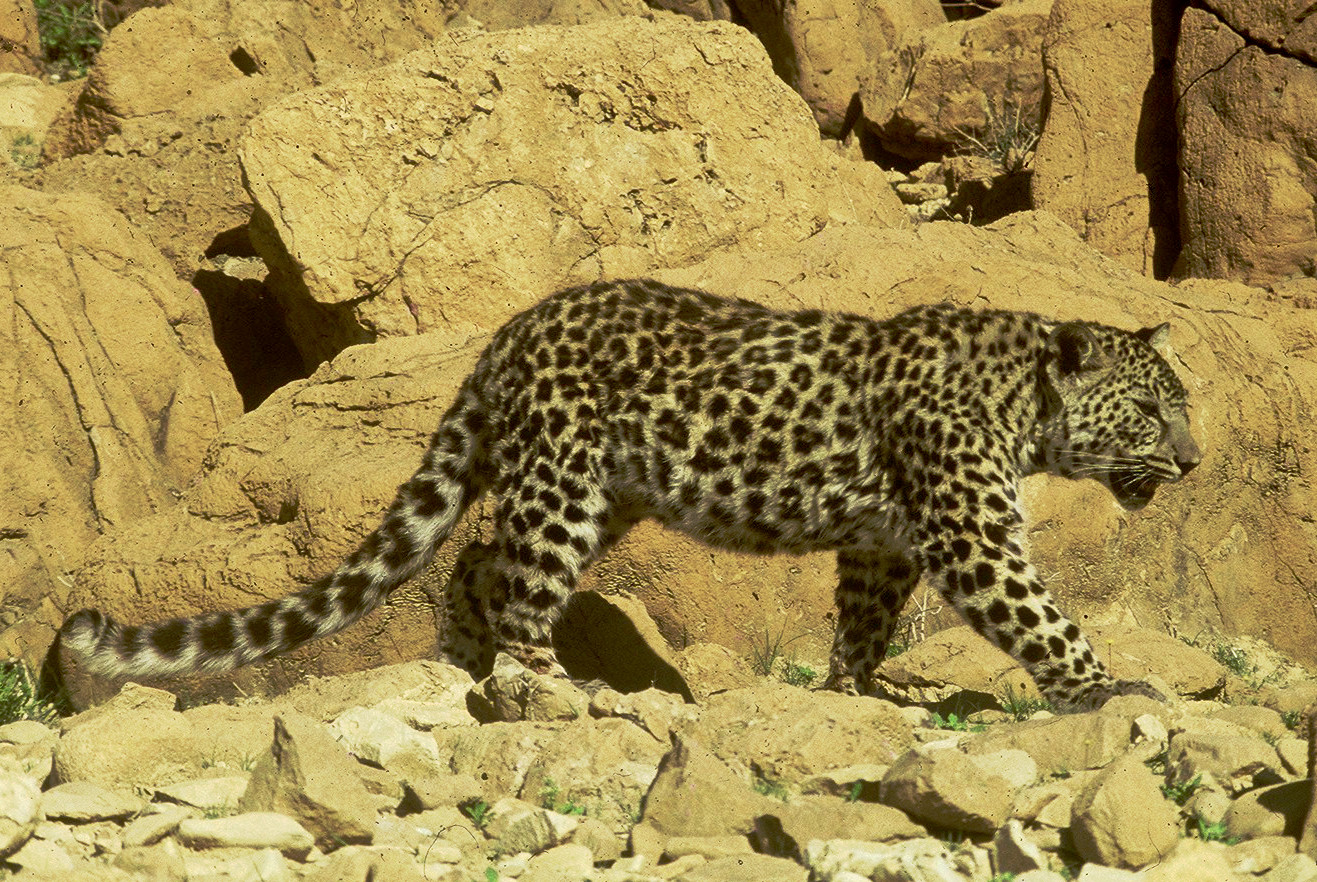
Once Islam was the sole and highest authority during the latter years of the Rashidun Caliphate, a member of Banu Numayr remembers calling Nafud Desert his home. They were being exiled further north, as forces of Islam kept pushing Byzantine further back and eventually towards Anatolia. Him and his fellow tribesmen were either busy poaching leopards in the region for their own gain or raiding caravans in the region swiftly and efficiently enough to be called “leopards” by the others. And who knows, perhaps sometimes even both. Some even believed that it was them who gave their Tribe their name too. It is not always easy or possible to establish an accurate timeline of nomadic cultures such as the Bedouin. And Bedouins these men were, and Bedouins their sons and daughters they wanted to remain. This wish of theirs was largely held true and accurate, which some of their descendants will take to rather extreme ends.
Another hero remembered coming up with a great idea. He did not remember whether it was his original idea or whether his Tribe organically shifting in its opinion has seeded this idea into him. But its ramifications did not change with this possible dispute in its real origin. And ramifications were that they were to fall-in-line under the banner of Islam. Whether genuinely sincere or not, this hero did not share with me. At least not yet, he also added. In any case, it was after Banu Numayr’s exile north and not before. Some chose then-mainstream Shia while others picked the Sunni route. It is the ones that chose the Sunni route will eventually get rich rather quickly but also lose everything they got their hands on even quicker. It will be these Sunni’s that between 900’s and early 1100’s establish their authorities in a triangle region between establishments of Raqqa (in Iraq), Harran (in Turkey) and Halab (or Aleppo, in Syria). It will also be them who will keep their traditional Bedouin ways a bit too tightly, and rule cities but not reside in them. Instead choosing to actually tent in the open country to do even their complicated administrations. But in time, yet another mass migration (this time in the form of mostly Turkic tribes arriving from the east) spells their doom even before they could react. It is around the time when Seljuk’s finally established their dominance in the region firmly when the so-called Numayrid Emirate breathed its last and rather soon after it began breathing in the first place.
Some members that chose the Shia route, as was actually the majority in the area of contemporary Iraq and Syria, began becoming philosophers more and more as time went on. Some even rose in ranks within others who also followed the Shia route. This growing tradition among them will probably be the best and the worst thing that will ever happen to them. And yes, both can exist and dominate at the same time.
There was one particular Philosopher among the tribe of Banu Numayr, but this time almost at the end of their history. He is the last of his kind to be remembered by many. He walked among the highest and most respected members of the route he was on. It was the death of famous Hasan Al-Askari that spelled his and his followers’ dooms though. But spells of any doom can be utilized for good purposes, my dear reader. And it was after this Philosopher’s doom that all remainders of Banu Numayr also had to go completely and utterly underground. It is to this Philosopher himself I myself am drawing a line of Fate in between me and him.
And finally, one member of Banu Amr shamefully admitted using his Clan’s name instead of his Tribe’s because he was ashamed of what some of the heroes and philosophers of his tribe were known to be doing. While there is nothing inherently wrong with admitting shame, I think this particular member was simply in a genuine disagreement with the majority of his tribe. At least within the period he was talking about feeling his shame, the period which was uncertain.
Can anybody actually be every one of these heroes? Not literally, of course not. But this has been my Origin Story thus far in all its dimensions and I truly feel like this is only the beginning, dear reader.
Remnants of Some Questions
Meaning remnants of the “canonically-false prophet” Maslama’s teachings. If it sounded interesting to you; you might be wondering if there are any reached today. If you look them up yourself, dear reader, I think you would also agree with me that most of what he is rumored to have been preaching can easily be considered quite progressive compared to how social life is nowadays in both Arabia and the wider Islamic regions. But now step back and ask yourself this question:
What if the humanity itself has lost its canon? Does it not seem like it is “drifting away”, or is it “still progressing further”? Does the fact that we are currently living ones justify and truly canonize everything victors of conflicts have done? My answer would be that it ideally depends; depends on whether anyone left standing who still believes in the opposite side(s). I guess in this sense, I *can* be called a man of belief too. Especially if you also believe in the “strict” necessity of a healthy person to “believe in something”, which I necessarily do not. But certainly and allergically not, if this something is a supernatural being or force. Then what does this actually make me? Let’s just say that I also believe in people’s freedom to their own opinions and expressions thereof, and leave it here.
Concluding
I would like to conclude with a sincere question that might put an unsuspecting believer of Islam in a stomach-aching paradox:
“My ancestors *literally* saw your prophet and chose to take arms against him; ultimately fought for another prophet and some even died for him. If I, fourteen centuries later, believe in Mohammad’s words without even seeing the dude; what would I say to my great-ancestors in your afterlife?”. This question might even be modified to the event of all of us ending up in an Arabian hell in the hands of (what can at its best can be perceived as in lenses of this story) an unforgivably spiteful god figurine, not much more. And if you take me at my word, never have been. But then, even then; this whole thing would lose its point now to be perfectly frank, would it not? Please keep your dogma(s) to yourself at all costs dear reader, if you happen to have any. May a truly-definitive conclusion be as far away as it can be to any real heroes.
“Great things don’t require much explaining. One usually recognizes it by instinct.”
Leave a Reply